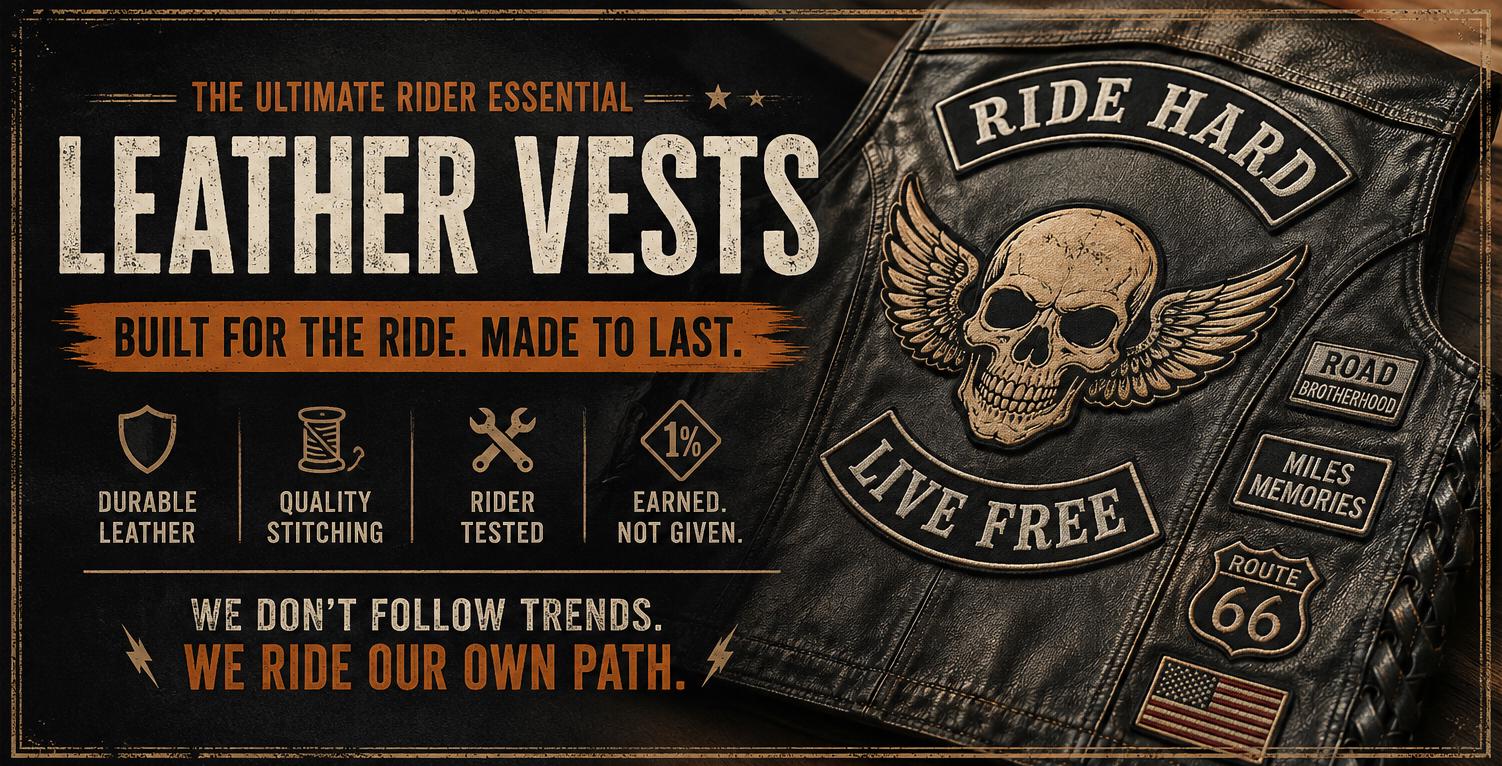
There's a reason the leather vest outlives every other trend in motorcycle fashion. Jackets change with the seasons. Boots wear out. But a good vest just keeps aging into something better, heavier with meaning, lighter on your shoulders than a full jacket ever was. If you've ever wondered why so many riders treat their vest like a second skin, this is the piece that explains it.
The Vest Isn't Just a Smaller Jacket
A lot of new riders assume a vest is basically a jacket with the sleeves cut off. It's not, and treating it that way misses the point entirely. A vest is its own category, built for a different kind of coverage, a different climate tolerance, and honestly, a different relationship with the person wearing it. A genuine riding vest uses heavier hide than most casual leather goods, cut to sit close through the shoulders without restricting your reach to the bars. A fashion vest, the kind you'd find folded on a rack at a mall store, usually skips all of that in favor of a look. Thinner leather. Lighter stitching. Fine for a photo, less fine for four hundred miles of wind and weather. Neither is wrong, they just serve different purposes. Know which one you're actually wearing before you decide it's ready for a real ride.
What Separates a Vest Worth Keeping From One You'll Replace in a Year
Here's the thing nobody tells you when you're shopping for your first one: most of what makes a vest good is invisible until you've owned it a while. The hide matters more than the price tag suggests. Full grain leather develops character the longer you wear it, a patina that actually looks better with time. Top grain is the more budget conscious cousin, still durable, just without quite the same long term payoff. Either beats split or bonded leather, which tends to crack and thin out faster than most people expect. Stitching is where corners get cut. Run your fingers along the seams before you buy. Double or triple stitching at the shoulders and side panels means someone actually built this thing to survive stress, not just hold together on a hanger. Hardware tells on cheap construction fast. Snaps that feel loose or hesitant now will feel worse in six months. Same with zippers, if the vest has them, smooth or sticky, you'll know within the first few uses. The fit has to work with your body, not against it. Too tight through the shoulders and you'll feel it after twenty minutes in riding position. Too loose and it flaps at speed. Adjustable side laces or buckles solve most of this. They let the vest evolve as the leather breaks in.
The Part That Actually Makes It Yours
Here's what no other piece of riding gear does quite as well: a vest becomes a record. Every patch has a reason for being there. A ride finished. A club joined. A memory that mattered enough to stitch onto fabric you'd wear for the next decade. The back panel usually holds the bigger statements, club colors, major patches. The front and pockets are where the smaller, more personal additions live. None of that works, though, if the vest itself can't take repeated stitching without the leather weakening underneath. That's another reason construction quality isn't optional. It's what lets the vest keep absorbing your story for years instead of falling apart around it.
Styling It, For Anyone Who Rides
For a classic look: Layer a vest over a flannel or long sleeve shirt, add a plain or graphic tee underneath, and you've got a silhouette that's been recognizable for generations. It only improves with wear. For something more tailored: Vests cut specifically for a woman's frame, narrower through the waist, shaped at the shoulder, pair naturally with a simple tank or fitted tee. Rugged without losing shape. Through the seasons: Wear it alone over a tee in summer for core coverage without overheating. Layer it over a hoodie or flannel as it cools down. A lot of riders lean on their vest as the primary outer layer for three seasons out of four, saving the full jacket for when winter actually arrives.
A Quick Note on Buying Smart
You don't need to overpay to get something that lasts. The upside of shopping with a retailer that focuses entirely on leather vests, rather than treating them as one small category buried in a massive catalog, is that the details actually get attention. That's the whole model behind Zuhaad Leather: vests, and nothing but vests, done properly. You can browse the full range there, or find current listings over on our Etsy shop. A few habits that help regardless of where you shop:
- Buy off season when demand (and prices) drop
- Watch for the obvious sale windows, Black Friday, Memorial Day, similar dates
- Get on a retailer's email list; early access to sales is usually worth the inbox clutter
- Check clearance sections directly on specialty sites, last season's cut, same construction quality
The Real Test
At the end of the day, a good leather vest doesn't need much explaining. You'll know within the first few rides whether it holds up, whether it moves with you, whether the stitching gives you any doubts. The best ones don't just survive that test, they get better every year afterward, patch by patch, mile by mile. Zuhaad Leather makes leather vests, that's the whole catalog, and we like it that way. Take a look at zuhaadleather.us or our Etsy store.