A genuine leather vest is more than ordinary outerwear. It is a long-term investment that can retain its strength, appearance, and character for decades when properly maintained.Whether you wear your vest while riding a motorcycle, exploring outdoors, or creating everyday outfits, dirt, sweat, body oils, dust, and accidental stains gradually accumulate on its surface. Incorrect cleaning can dry out the leather, fade its color, weaken its stitching, or cause permanent cracking.Fortunately, learning how to clean a leather vest is not complicated. With suitable products, gentle cleaning techniques, proper drying, and regular conditioning, you can keep your vest looking refined for years.This complete leather vest care guide explains how to identify your leather type, prepare the garment, remove common stains, clean the lining, apply conditioner, dry the vest safely, and store it correctly.
Why Proper Leather Vest Care Matters
Leather is a natural material that contains oils responsible for keeping it soft, flexible, and durable. Exposure to sunlight, sweat, rain, dirt, heat, and unsuitable cleaning chemicals can gradually remove these natural oils.Without appropriate care, leather may become dry, stiff, discolored, or cracked.Proper leather vest care helps:
- Extend the lifespan of the vest
- Preserve its natural softness and flexibility
- Prevent premature cracking and peeling
- Maintain its original color and finish
- Protect stitching, zippers, snaps, studs, and other hardware
- Encourage the development of a natural patina
- Reduce the need for expensive repairs or replacement
A few minutes of regular maintenance can protect both the appearance and structural quality of your leather vest.
Know Your Leather Before Cleaning
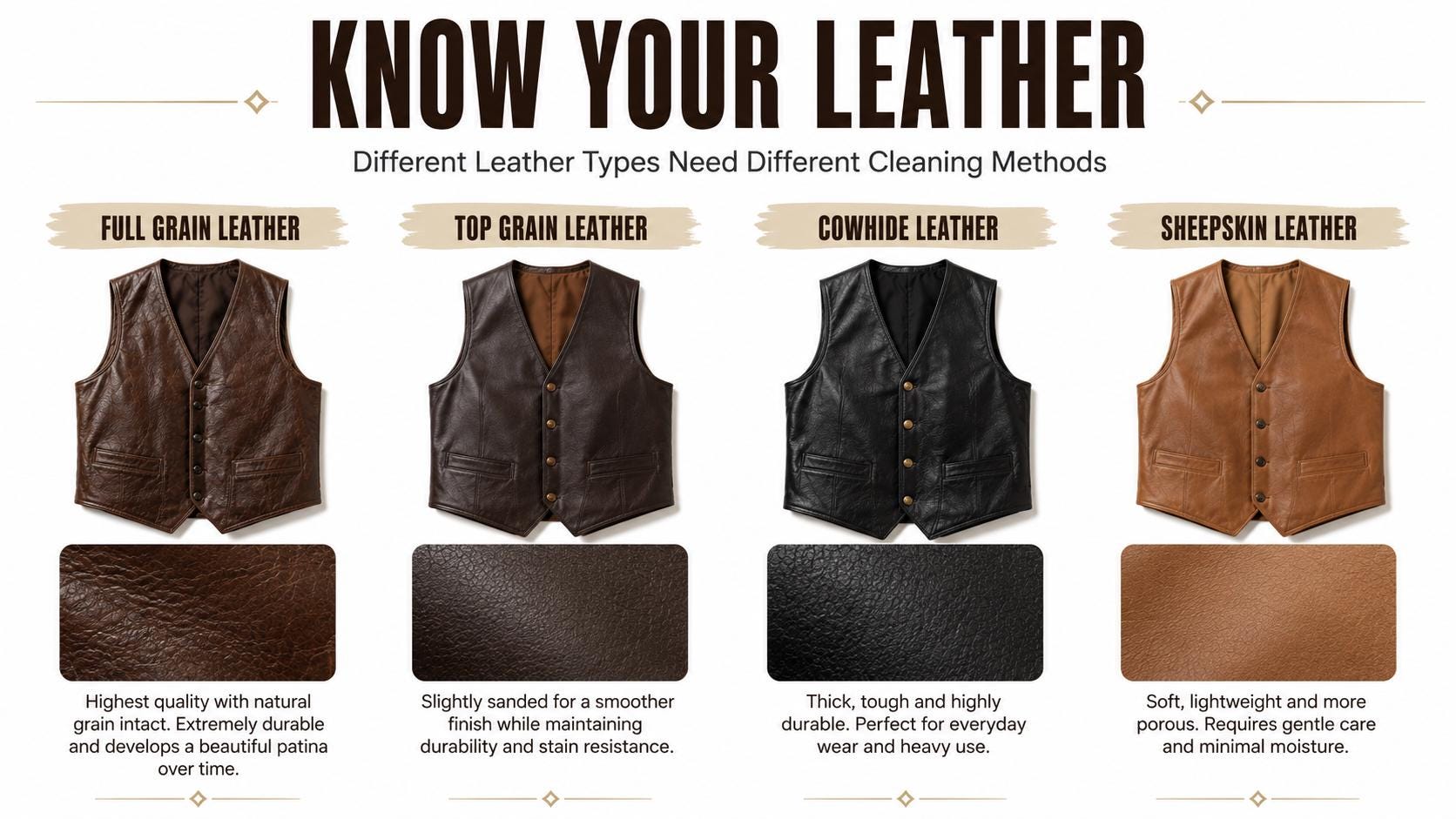
Not every leather vest should be cleaned in exactly the same way. Identifying the leather type is the first step toward choosing a safe cleaning method.
Full-Grain Leather
Full-grain leather retains the natural grain and character of the hide. It is strong, durable, and capable of developing a distinctive patina over time.A purple full-grain leather vest for women should be cleaned gently with a suitable leather cleaner and conditioned periodically to preserve its natural surface.Avoid abrasive scrubbing because it can alter the grain and create uneven marks.
Top-Grain Leather
Top-grain leather has a smoother surface because the outer layer has been lightly refined. It is durable, relatively easy to clean, and commonly used in premium leather apparel.When maintaining a blue quilted top-grain cowhide leather vest, use a soft cloth and pay additional attention to quilted seams where dust can collect.
Cowhide Leather
Cowhide is thick, structured, and highly resistant to everyday wear. It can usually tolerate routine surface cleaning better than softer, more porous leathers.This durability makes cowhide popular for biker garments such as a handmade black leather biker vest for men.Durability does not mean cowhide can be soaked or scrubbed aggressively. Gentle cleaning remains essential.
Sheepskin Leather
Sheepskin is softer, lighter, and more porous than cowhide. Because it absorbs moisture relatively quickly, use minimal water and gentle pressure.
Aniline Leather
Aniline leather has little protective surface coating. Its natural appearance makes it luxurious, but it is also more susceptible to moisture, stains, and color changes.Professional cleaning may be safer for serious stains on aniline leather.
Pigmented Leather
Pigmented leather has a protective finish that offers greater resistance to moisture and everyday stains. It is generally easier to maintain, but harsh cleaners can still damage its coating.
Suede and Nubuck
Suede and nubuck require specialist brushes and cleaning products. Avoid excessive water, standard leather polish, and ordinary conditioner unless the product is specifically approved for these materials.
Faux Leather
PU or faux leather does not require genuine leather conditioner. It can usually be wiped with a damp microfiber cloth and a small amount of mild soap, subject to the manufacturer’s instructions.
Check the Care Label Before You Begin
Always read the manufacturer’s care instructions before cleaning your vest.The label may specify:
- Professional leather cleaning only
- Approved leather care products
- Material composition
- Lining care instructions
- Water restrictions
- Drying recommendations
Following these instructions reduces the possibility of discoloration, shrinkage, stiffness, or damage to the finish.
Leather Vest Cleaning Supplies You Will Need
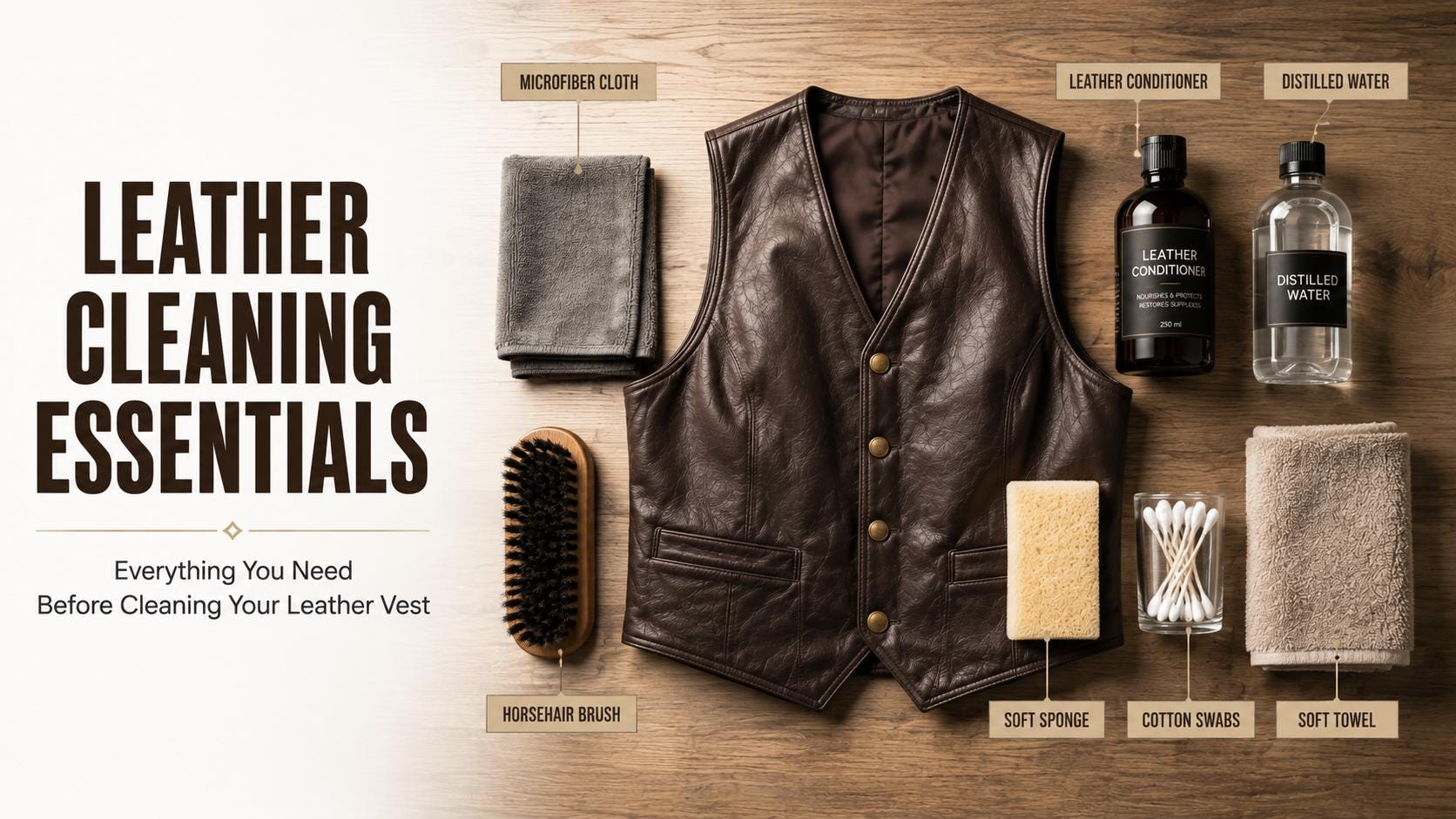
Gather all necessary supplies before starting the cleaning process.You may need:
- Soft microfiber cloths
- A soft horsehair or soft-bristle brush
- Distilled water
- Mild leather cleaner
- Leather conditioner
- Cotton swabs
- A soft sponge
- Clean absorbent towels
- A wide padded hanger
Avoid bleach, ammonia, vinegar, acetone, abrasive scrubbers, strong detergents, and general household cleaners. These products can remove the leather’s protective finish and natural oils.
Prepare Your Leather Vest Before Cleaning
Preparation helps prevent scratches, uneven cleaning, and accidental damage.Remove everything from the pockets and gently shake out loose debris. Use a dry microfiber cloth or soft brush to remove dust, hair, and surface dirt.Pay close attention to:
- Seams
- Armholes
- Collars
- Pocket openings
- Quilted panels
- Zippers and snaps
- Decorative studs
- Belt loops and adjustable sections
Dust can settle between the quilted panels of a men’s quilted black leather vest, so clean these areas using a soft brush without pressing aggressively.If cleaning a brown belted leather vest for women, inspect the belt, zipper, loops, and surrounding seams separately because dirt can accumulate around movable components.Identify grease, ink, sweat, food, water, or mold stains before applying moisture. Different stains require different treatment methods.
Always Perform a Spot Test
Before applying a cleaner across the entire vest, test it on a hidden area such as the inside hem or lower back.Apply a small amount of cleaner with a soft cloth and wait 30 to 60 minutes. Check the tested area for:
- Discoloration
- Darkening
- Color transfer
- Stiffness
- Texture changes
- Damage to the finish
Spot testing is especially important with brightly colored pieces such as a men’s quilted yellow leather vest.It is equally important for multi-color designs such as a women’s burgundy two-tone leather vest, as different panels may react differently to the same cleaner.Proceed only when the tested area remains unchanged.
Step-by-Step Guide to Cleaning a Leather Vest
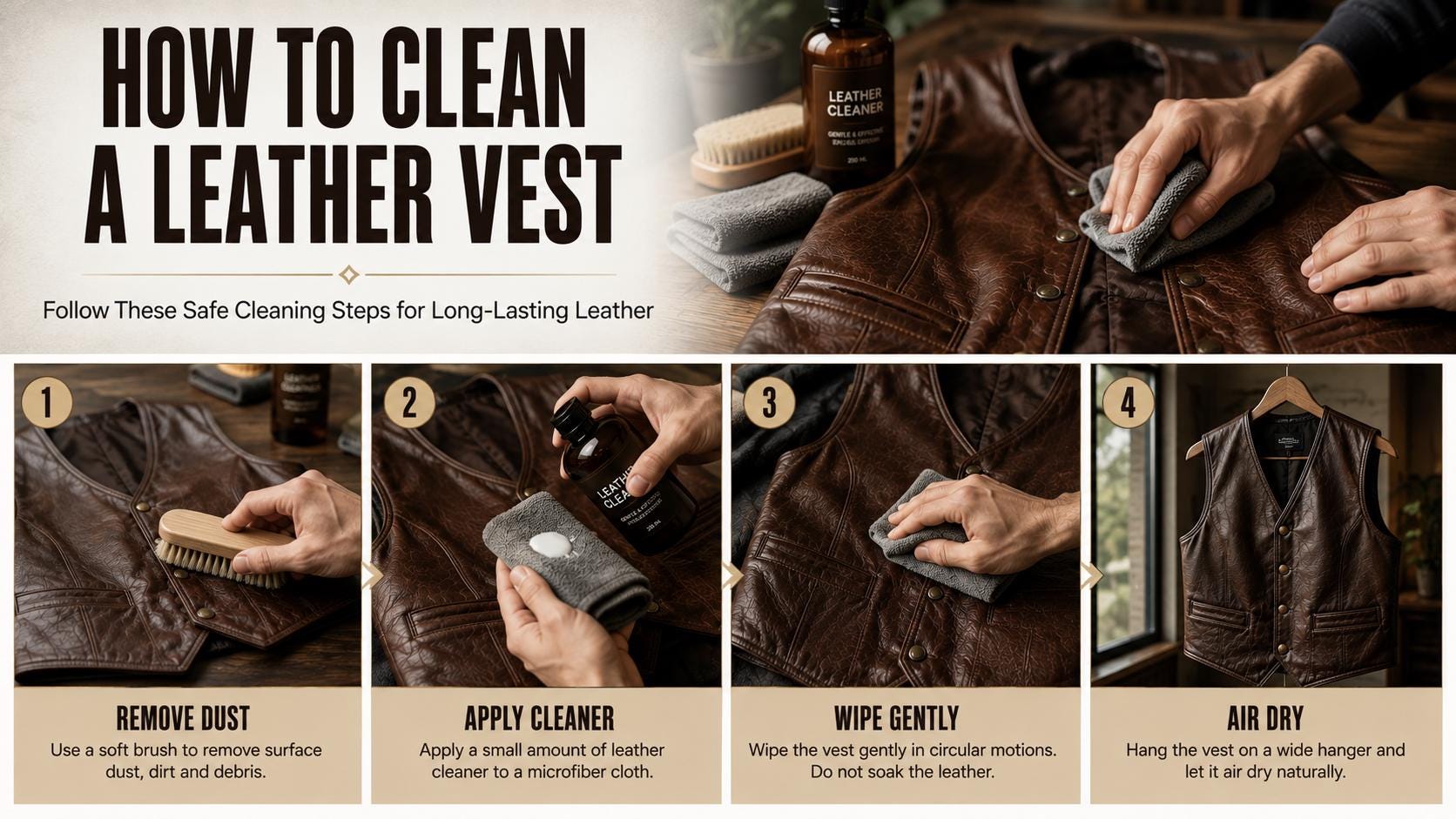
Begin by wiping the vest with a barely damp microfiber cloth to remove loose surface dirt.Apply a small quantity of leather cleaner to the cloth rather than pouring or spraying it directly onto the leather. Clean one small section at a time using light circular movements.Avoid soaking the material. Excessive water can penetrate the fibers and cause stiffness, distortion, or warping.For areas around the collar, shoulders, armholes, and pockets, apply light pressure and allow the cleaner to loosen the dirt naturally. Do not scrub aggressively.Use cotton swabs or a soft brush around zippers, snaps, and decorative hardware. A design such as a men’s two-tone studded leather biker vest requires careful cleaning around the studs and contrasting panels.Similarly, clean the hardware of a red studded leather biker vest for women carefully without allowing cleaner to collect underneath the studs.After cleaning, wipe away residue using another cloth lightly dampened with distilled water. Pat the vest with a clean towel and allow it to air dry.
How to Clean a Leather Vest Lining
The interior lining collects sweat, body oils, and odors over time.Turn the vest inside out as far as its construction safely permits and place it on a wide padded hanger. Mix a few drops of mild detergent with distilled water and lightly dampen a microfiber cloth.Wipe the lining in small sections without allowing moisture to soak through to the leather exterior. Blot every cleaned area with a dry towel before continuing.Pay particular attention to the armholes, neck, and fitted waist areas. These areas may collect more perspiration in a close-fitting garment such as a women’s fitted teal leather vest.Leave the vest hanging in a cool, shaded, and well-ventilated room until the lining is completely dry.
How to Remove Different Types of Leather Vest Stains
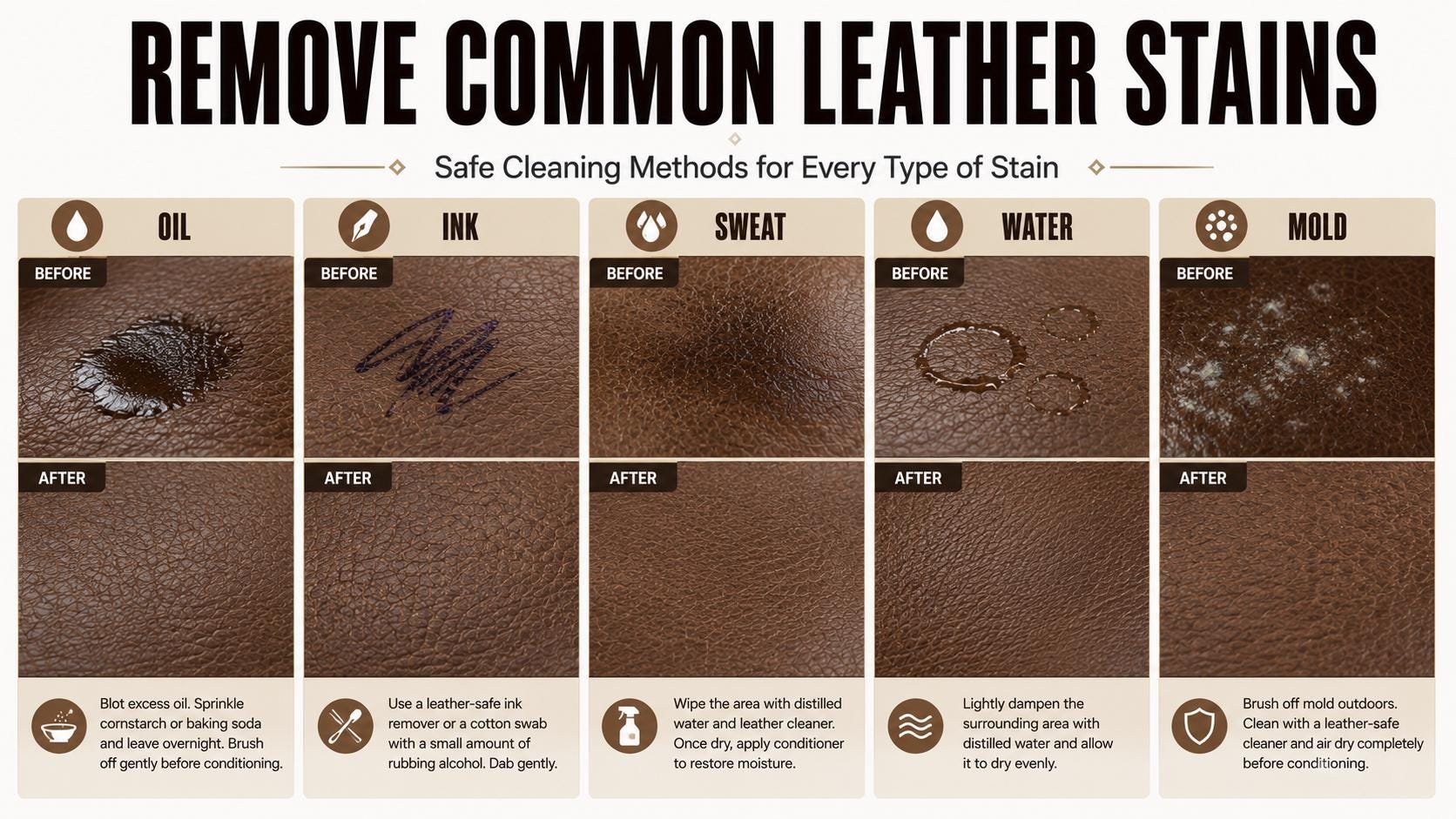
Different stains require different treatments. Always begin with the gentlest method and perform a spot test.
Oil and Grease
Blot excess oil immediately using a clean, dry cloth. Do not rub, as this can spread the stain.For suitable finished leathers, sprinkle a small amount of cornstarch or baking soda over the affected area and leave it overnight. Gently brush away the powder the following day.If the mark remains, consult a professional leather cleaner.
Ink
Use a leather-safe ink remover according to the product instructions. Apply it with a cotton swab and gently dab the mark.Avoid rubbing alcohol unless the manufacturer specifically approves it, because alcohol can remove dye and damage the leather’s protective finish.
Sweat
Wipe the affected area with a cloth lightly dampened with distilled water and an approved leather cleaner. Allow the area to dry completely before applying conditioner.Clean the lining as well because sweat often penetrates the interior fabric before affecting the outer leather.
Food Stains
Carefully lift away solid residue without scratching the surface. Wipe the affected area with a small amount of mild leather cleaner and a soft microfiber cloth.Avoid rubbing oily or colored food deeper into the leather.
Water Spots
Lightly dampen the surrounding area with distilled water to help the surface dry more evenly and reduce visible rings.Do not saturate the leather. If the finish is delicate or aniline, professional treatment may be safer.
Mold and Mildew
Take the vest outdoors and gently brush away loose mold while wearing suitable protection. Clean the affected area using a leather-safe cleaner.Allow the vest to air dry completely in a shaded, ventilated location. Do not store it until every part is dry.Extensive mold growth should be handled by a professional cleaner.
Why Conditioning Your Leather Vest Is Essential
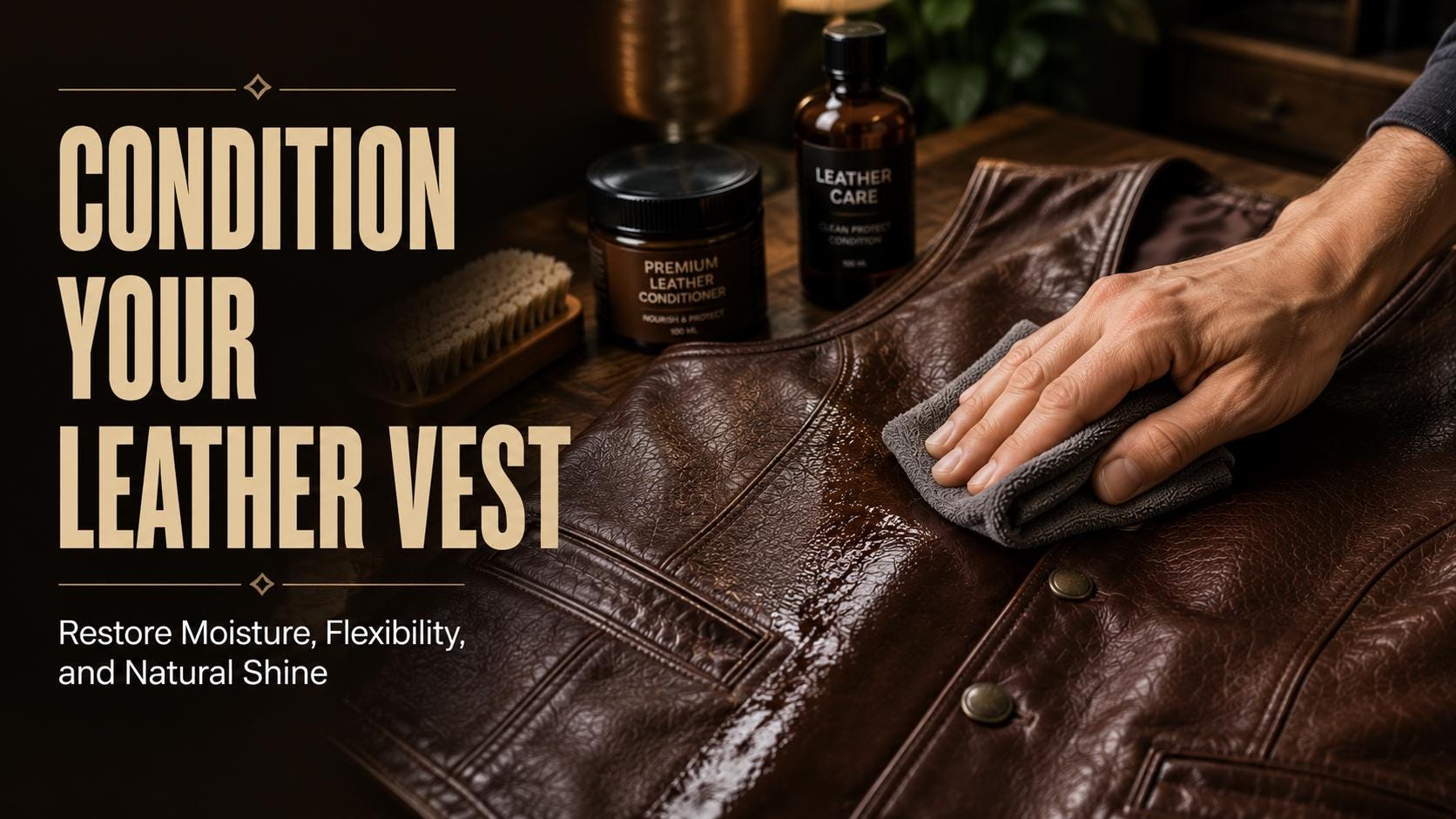
Cleaning removes dirt, but it can also remove some natural oils that keep leather flexible.A suitable leather conditioner:
- Restores moisture
- Reduces stiffness
- Helps prevent cracking
- Preserves flexibility
- Supports the natural finish
- Helps maintain long-term comfort
Apply a small quantity of conditioner to a clean microfiber cloth. Work it gently into the leather using circular movements.Allow it to absorb for approximately 30 minutes or according to the manufacturer’s instructions. Buff away excess product using a separate clean cloth.Condition your vest every three to six months or after deep cleaning. The ideal frequency depends on the climate, leather type, and how often the vest is worn.Avoid over-conditioning because too much product can darken the leather or leave a sticky residue.
How to Dry a Leather Vest Properly
Always allow a leather vest to air dry naturally.Hang it on a wide padded hanger in a cool, shaded, and well-ventilated area.Never use:
- A hair dryer
- A clothes dryer
- A radiator
- Direct sunlight
- A heating vent
- An iron
High temperatures rapidly remove natural oils and can cause shrinkage, stiffness, discoloration, or permanent cracking.Do not condition wet leather. Wait until the vest is completely dry.
Can You Wash a Leather Vest in a Washing Machine?
No. A genuine leather vest should not be washed in a washing machine.Even a gentle cycle exposes leather to excessive water, detergent, and mechanical agitation.Machine washing may cause:
- Shrinkage
- Warping
- Color fading
- Cracking
- Stiffness
- Damaged stitching
- Distorted panels
- Corroded or damaged hardware
Spot cleaning or professional leather cleaning is considerably safer.
Common Mistakes That Damage Leather Vests
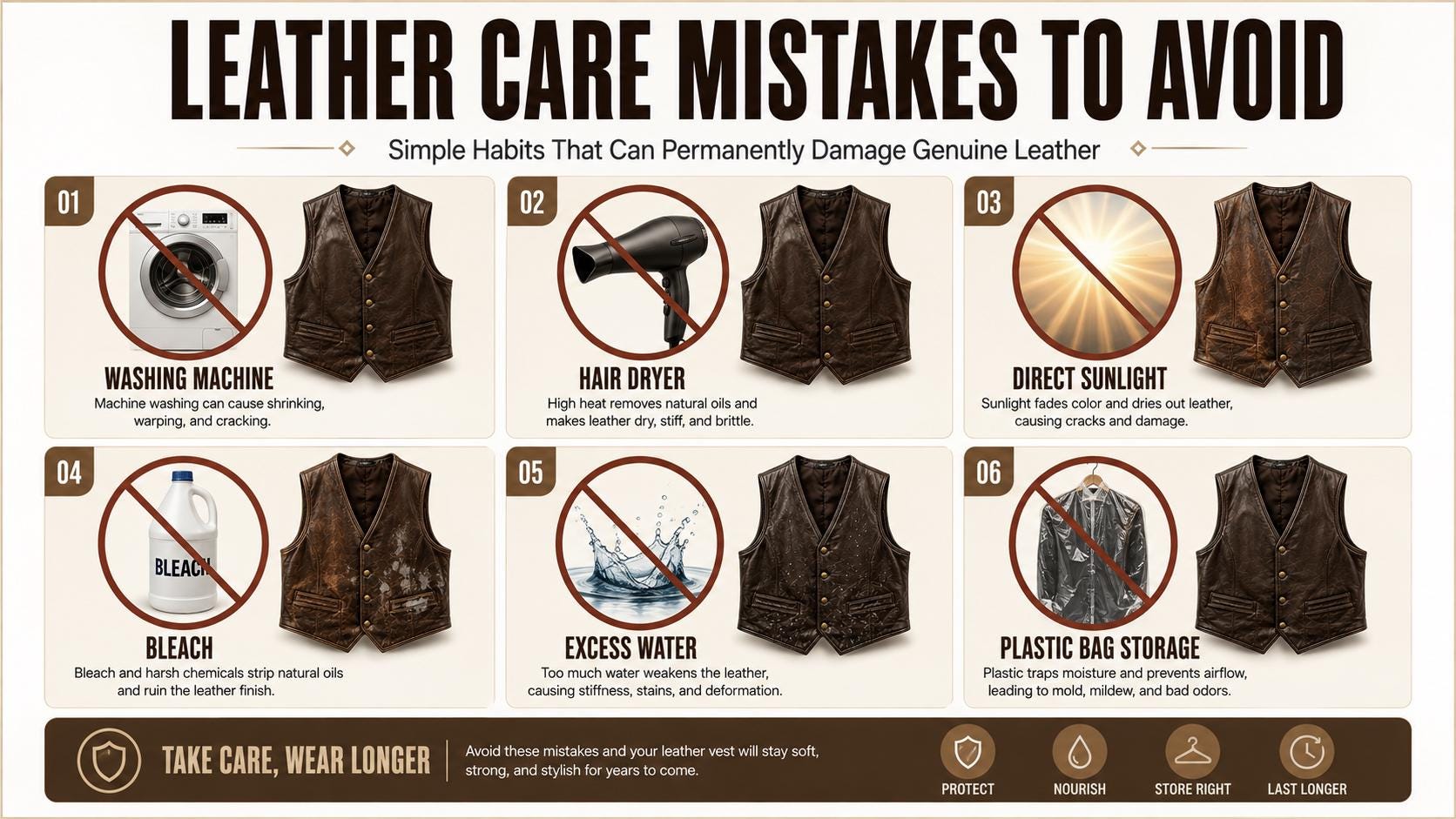
Many leather garments are damaged by incorrect cleaning rather than normal wear.Avoid:
- Using bleach
- Applying vinegar or harsh chemicals
- Pouring cleaner directly onto leather
- Soaking the vest
- Scrubbing aggressively
- Drying it with direct heat
- Leaving it in direct sunlight
- Skipping conditioner after deep cleaning
- Applying too much conditioner
- Storing it in a plastic garment bag
- Folding it for an extended period
- Using polish that does not match the leather type
Preventive care is easier and less expensive than restoring severely damaged leather.
How to Remove Bad Odors Naturally
If your leather vest smells musty or has absorbed perspiration odors, avoid spraying perfume or air freshener directly onto it.Instead:
- Air the vest in a cool, shaded location
- Clean the interior lining carefully
- Place baking soda nearby without applying it to delicate leather
- Use activated charcoal inside the storage area
- Ensure the vest is completely dry before storing it
Persistent smoke, mold, or chemical odors may require professional treatment.
How to Store a Leather Vest Properly

Correct storage plays an important role in preserving leather quality.Always:
- Hang the vest on a wide padded or wooden hanger
- Store it in a cool and dry place
- Use a breathable cotton garment bag
- Keep it away from sunlight and high humidity
- Leave space between garments to prevent creasing
- Close or support heavy hardware to prevent distortion
- Avoid folding the vest for extended periods
If storing the vest for several months, clean and condition it beforehand. Make sure it is completely dry before placing it in a breathable garment bag.
Seasonal Leather Vest Maintenance Tips
Leather responds differently to changing weather conditions.During humid months, improve airflow around the storage area and regularly inspect the vest for mold or mildew.In winter or dry climates, conditioning may be needed more frequently to prevent stiffness and cracking.After wearing your vest in light rain, wipe away excess moisture and allow it to air dry naturally before storage.Never place a damp leather vest inside a closed wardrobe or garment bag.
When Should You Use a Professional Leather Cleaner?
Home cleaning is suitable for routine maintenance, but some problems require professional care.Seek professional leather cleaning when your vest has:
- Deep oil or grease stains
- Large ink marks
- Extensive mold growth
- Smoke damage
- Severe discoloration
- Cracked or peeling leather
- Antique or vintage finishes
- Delicate aniline, suede, or nubuck material
- Structural damage to stitching or hardware
Professional restoration can help preserve valuable leather garments that might otherwise be permanently damaged.
Frequently Asked Questions
How often should I clean my leather vest?
Remove surface dust every few weeks if the vest is worn regularly. Deep cleaning should only be performed when necessary.
Can I use dish soap on leather?
A very small amount of mild soap diluted with distilled water may be suitable for certain finished leathers, but a leather-specific cleaner is generally safer. Always check the care label and perform a spot test.
Can rain damage a leather vest?
Light rain is usually manageable when the vest is dried correctly. Prolonged soaking can cause stiffness, water marks, discoloration, or distortion.
Does a leather vest need conditioner?
Yes. An appropriate leather conditioner restores some of the moisture lost during cleaning and helps reduce dryness and cracking.
How often should I condition my leather vest?
Condition it approximately every three to six months, after deep cleaning, or whenever the leather begins to feel dry. Avoid applying conditioner too frequently.
Can I put a leather vest in a clothes dryer?
No. Clothes dryers expose leather to intense heat and mechanical movement, which can cause shrinkage, warping, and cracking.
How long does a genuine leather vest last?
A well-made genuine leather vest can last for many years or even decades when it is cleaned gently, conditioned appropriately, dried naturally, and stored correctly.
Final Thoughts
Knowing how to clean a leather vest properly is one of the most effective ways to protect your investment.Regular dust removal, careful stain treatment, gentle surface cleaning, appropriate conditioning, natural drying, and correct storage work together to preserve the leather’s appearance, strength, and flexibility.Whether your vest is made from full-grain cowhide, sheepskin, top-grain leather, or another premium material, consistent maintenance will help it look stylish and perform reliably for years.Treat your leather vest carefully, and it will reward you with lasting comfort, timeless character, and the durability that makes genuine leather so valuable.