Can leather vests get wet? Yes, leather vests can get wet, but they are not usually waterproof. A little rain or an accidental splash will not necessarily ruin a quality leather vest. The real concern is prolonged saturation and, especially, what happens while the leather dries.When leather becomes soaked, moisture can disrupt the oils and conditioning agents that help keep the material flexible. If the vest is then dried with excessive heat or left untreated, it may become stiff, dry, discolored, or even develop cracks.Fortunately, getting a leather vest wet does not automatically mean it is damaged beyond repair. With prompt and appropriate care, most minor water exposure can be managed successfully.This guide explains what happens when a leather vest gets wet, whether leather vests can be worn in the rain, how to dry wet leather safely, how to prevent water damage, and how to keep a leather vest looking its best for years.
Can Leather Vests Get Wet?
Yes, a leather vest can get wet, but genuine leather is generally water-resistant rather than completely waterproof.Leather has a naturally porous structure. Depending on the tanning process, finish, thickness, and protective treatment, some leather may repel water better than others. A finished motorcycle vest, for example, may tolerate a brief shower better than untreated suede or nubuck.The important distinction is between occasional moisture and prolonged saturation.A few drops of rain landing on the surface are unlikely to cause serious problems. However, if a leather vest is exposed to heavy rain for an extended period, water can gradually penetrate the material.That is when problems may begin.Wet leather can temporarily become darker and softer. As it dries, however, moisture can leave the leather feeling less supple because some of its lubricating oils and conditioning components may become displaced.For this reason, a leather vest should be treated with care whenever it becomes significantly wet.
Water-Resistant vs. Waterproof Leather
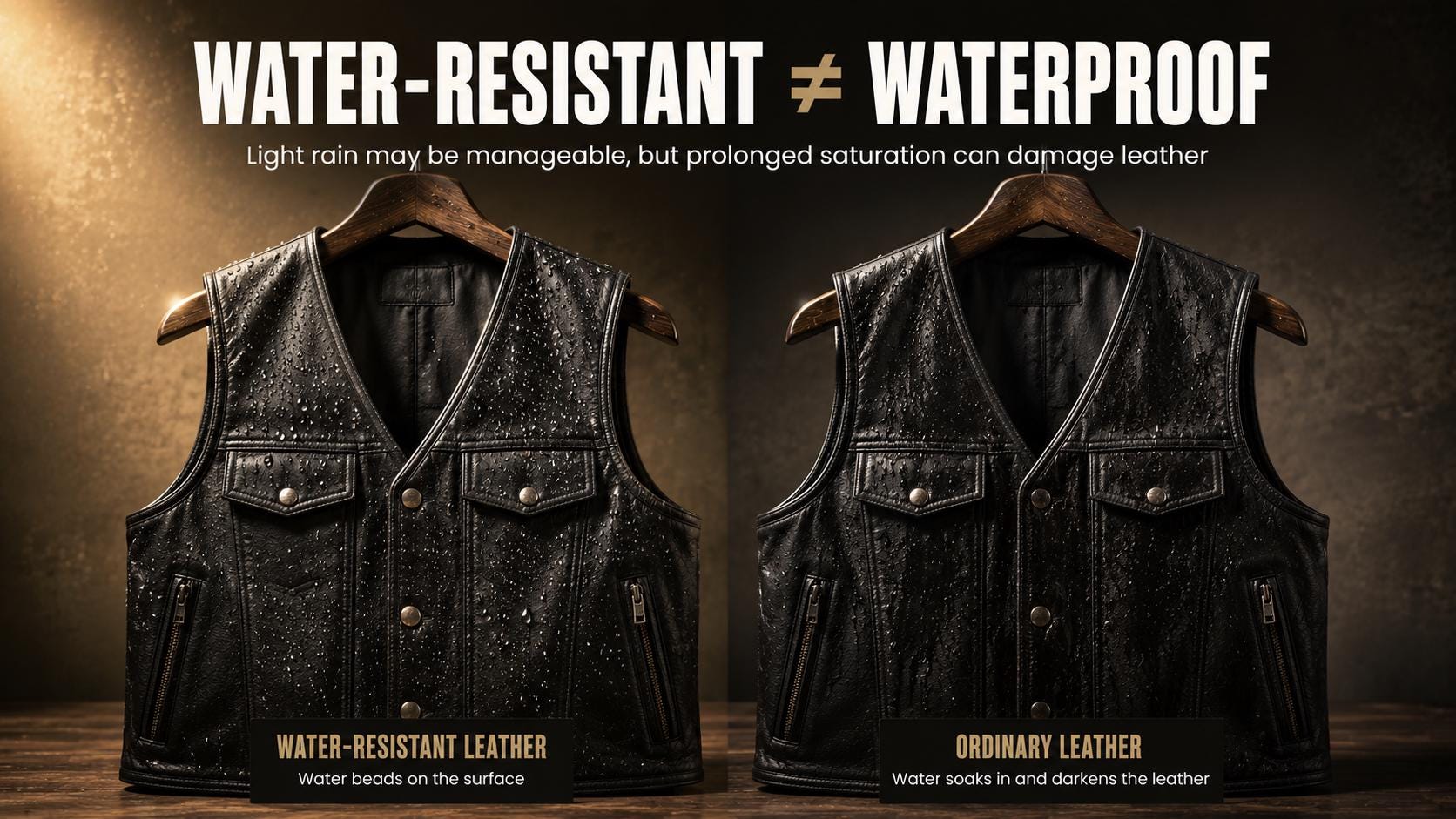
These terms are sometimes used interchangeably, but they describe different levels of protection.Water-resistant leather can repel or tolerate a certain amount of moisture before water penetrates the material.Waterproof leather is specifically engineered or treated to provide substantially stronger protection against water penetration.Most traditional leather fashion and motorcycle vests should be considered water-resistant at best unless the manufacturer specifically states otherwise.
What Happens to Leather When It Gets Wet?
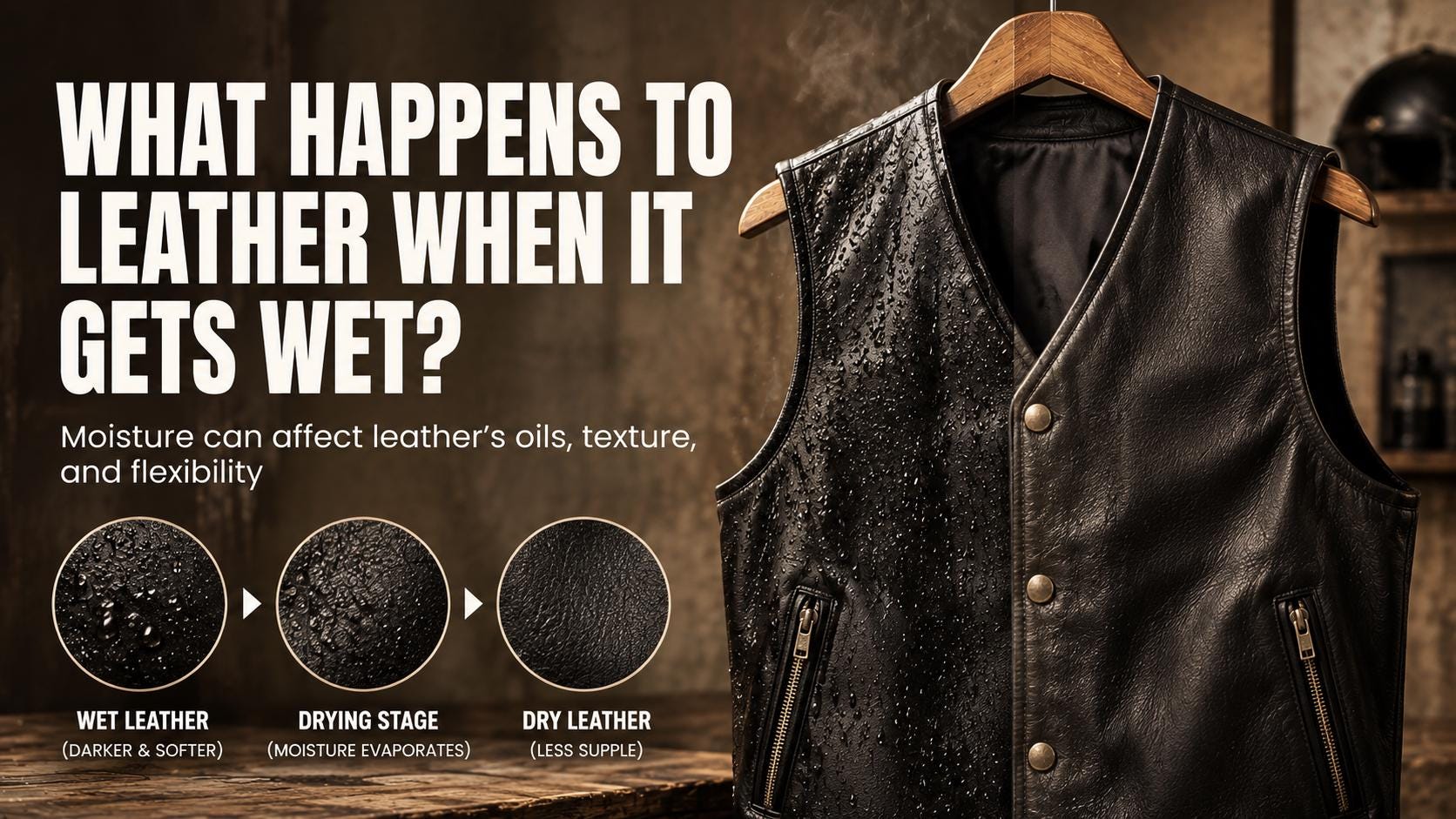
Understanding the relationship between water and leather makes proper care much easier.Leather contains a complex network of natural fibers. Oils and conditioning agents help these fibers remain flexible and resilient. When leather becomes heavily saturated, water penetrates between these fibers and can interfere with the material's normal balance.The leather may initially appear darker. This is usually because water temporarily changes the way light interacts with the surface.As the moisture evaporates, however, the leather can become noticeably drier.This is why the drying stage can be more important than the initial exposure to water.Improper drying may contribute to:
- Stiffness
- Dryness
- Cracking
- Shrinkage
- Uneven coloration
- Water marks
- Loss of suppleness
- Changes in surface texture
- Damage to certain finishes
The severity depends on several factors, including the type of leather, the amount of water absorbed, how long the vest remained wet, and how it was dried afterward.A brief drizzle and a completely soaked vest should never be treated as the same situation.
Is Genuine Leather Waterproof?
No. Genuine leather is not automatically waterproof.The term “genuine leather” simply indicates that the material is real leather. It does not tell you how the leather was finished, treated, dyed, or protected against moisture.Some leather vests have smooth protective finishes that provide decent resistance to light rain. Others have a more natural surface that absorbs moisture much more readily.Even high-quality leather can be vulnerable to excessive water.This is why leather care should focus on maintenance and prevention rather than assuming the material is impervious to the elements.A well-maintained leather vest can handle occasional moisture considerably better than neglected leather. A women’s handmade brown leather vest benefits from the same cautious, leather-specific maintenance as any other genuine leather garment.Conditioning helps preserve flexibility, while an appropriate protective treatment can improve resistance to incidental water exposure.
Can You Wear a Leather Vest in the Rain?
You can wear a leather vest in light rain, but it is better to avoid prolonged exposure whenever possible.If you are caught unexpectedly in a short shower, there is generally no need to panic. Simply get the vest out of the rain when practical and allow it to dry naturally.Heavy rain is different.A motorcycle rider who spends hours in persistent rainfall exposes a leather vest to considerably more moisture than someone walking through a brief drizzle. Repeated saturation can gradually affect the leather's appearance and physical properties.A useful guideline is:
- Light rain: Usually manageable
- Moderate rain: Use caution and dry the vest afterward
- Heavy or prolonged rain: Avoid whenever possible
If you frequently ride or work outdoors, including while wearing a handmade brown leather biker vest, consider using a compatible leather protectant and carrying suitable weather protection rather than relying entirely on the leather itself.
What Happens If a Leather Vest Gets Soaked?
A completely soaked leather vest needs immediate but gentle attention.When saturated, the vest may:
- Become heavier
- Darken considerably
- Feel softer temporarily
- Develop uneven coloration
- Lose some of its shape
- Become stiff after drying if handled incorrectly
The darker appearance is not necessarily permanent damage. Wet leather often looks dramatically different from its normal dry appearance.The biggest mistake is reacting too aggressively.Do not place the vest beside a heater. Do not use a hair dryer. Do not twist it or scrub the surface.Instead, focus on controlled drying.The objective is to allow moisture to evaporate gradually while helping the leather retain its natural flexibility and shape.
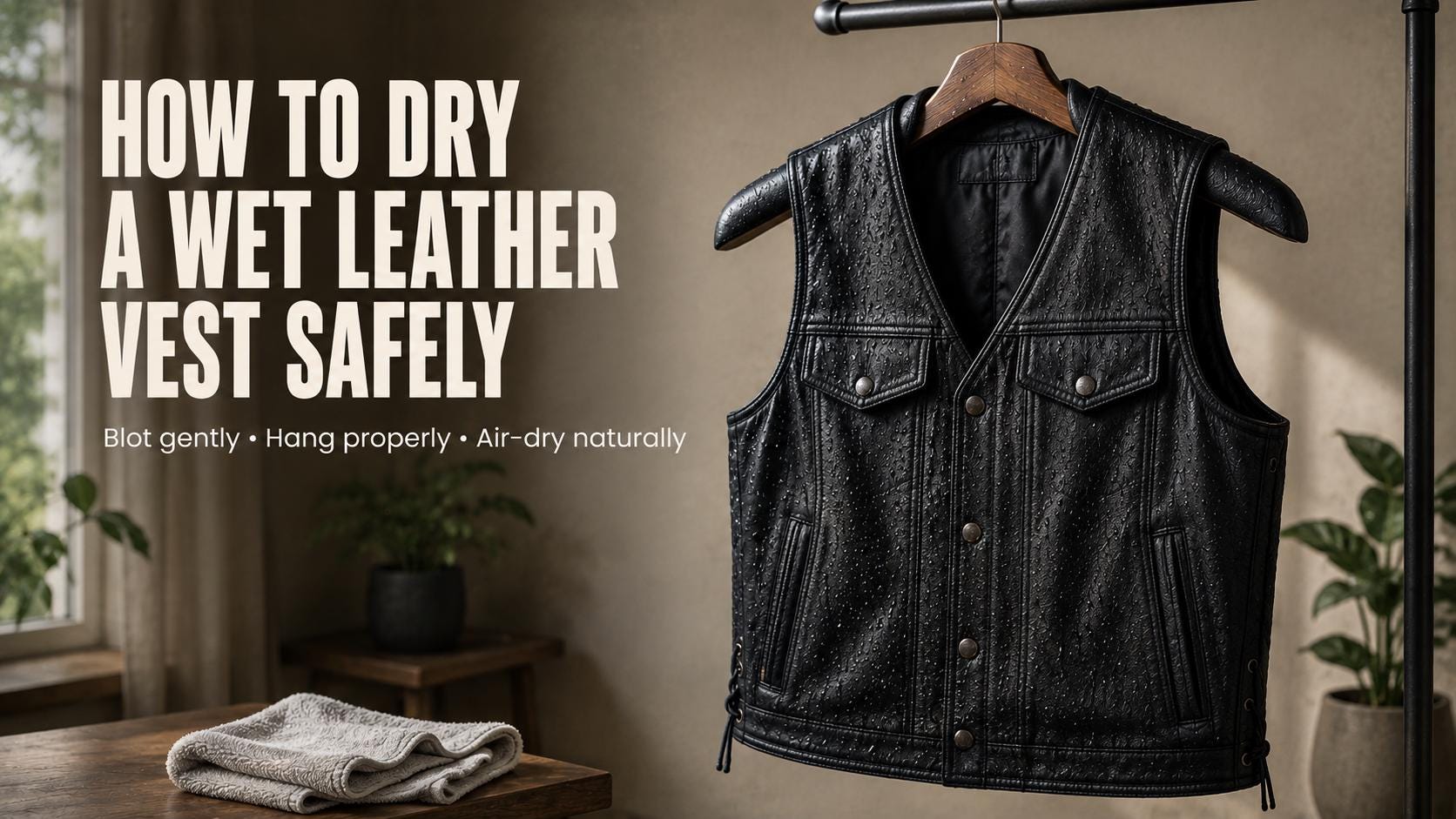
How to Dry a Wet Leather Vest Safely
If your leather vest has become wet, follow a careful drying process.
Step 1: Remove Excess Water
Use a clean, soft, absorbent cloth to gently blot the surface.Do not rub aggressively.The purpose is simply to remove standing water without disturbing the leather's finish.
Step 2: Put the Vest on a Wide Hanger
For a leather vest, use a broad, sturdy hanger rather than a narrow wire hanger.A wide hanger supports the shoulders and helps the vest retain its natural shape while drying.Avoid folding the wet vest and leaving it in a pile.
Step 3: Let It Air-Dry Naturally
Place the vest in a well-ventilated indoor area at normal room temperature.Keep it away from concentrated sources of heat.Natural air circulation is considerably safer than attempting to accelerate the process.Depending on how saturated the vest is, drying may take several hours or longer.Patience matters.
Step 4: Inspect the Leather
Once most of the moisture has evaporated, examine the vest carefully.Check whether the leather feels:
- Supple
- Dry
- Stiff
- Rough
- Uneven in color
- Marked by water spots
If it remains flexible and looks normal, extensive treatment may not be necessary.If it feels unusually dry, conditioning may help restore its suppleness.
Should You Condition a Wet Leather Vest?
Conditioning can be beneficial after significant water exposure, but timing and product selection matter.Leather conditioner is designed to replenish and maintain the material's flexibility. After substantial moisture exposure, an appropriate conditioner can help prevent the leather from becoming excessively dry.However, do not automatically apply a random conditioner to every leather vest.Different leather finishes require different products.For smooth finished leather, a compatible leather conditioner may be suitable. Suede and nubuck require specialized products and should not generally be treated like smooth-grain leather.Before applying any product:
- Read the manufacturer's care instructions.
- Choose a conditioner specifically compatible with the leather.
- Test it on a hidden area first.
- Apply a small amount rather than saturating the surface.
- Allow the product to absorb according to its instructions.
Too much conditioner can darken leather, create a greasy surface, or alter the finish.More conditioner does not mean more protection.
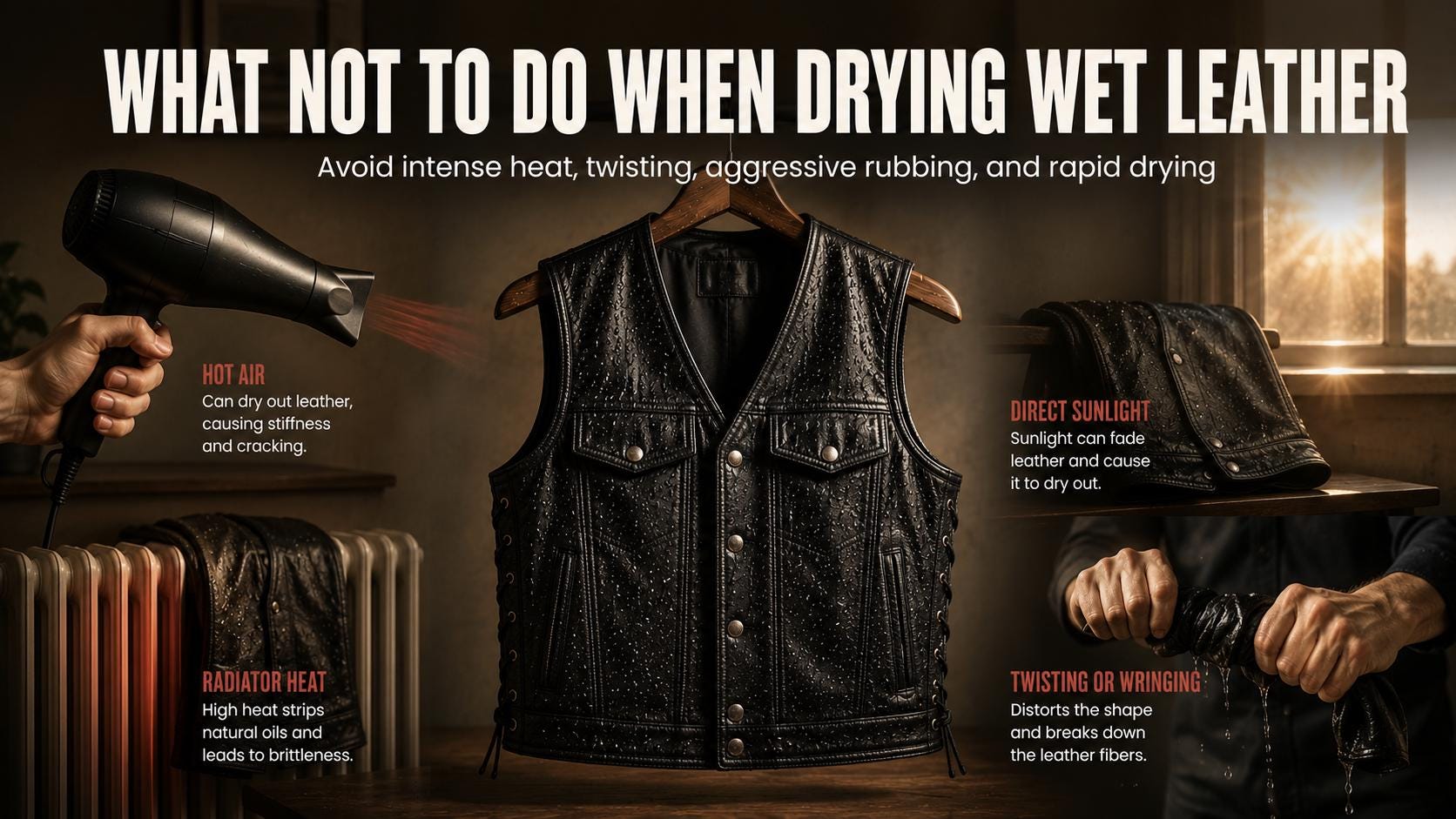
What You Should Never Do When Drying a Leather Vest
Improper drying can cause more damage than the original rain exposure.
Don’t Use a Hair Dryer
A hair dryer produces concentrated heat that can dry leather too rapidly.The result may be stiffness, shrinkage, discoloration, or cracking.
Don’t Put the Vest on a Radiator
Radiators and heaters create intense, localized heat.Leather needs gradual evaporation, not aggressive dehydration.
Don’t Leave It in Direct Sunlight
Strong sunlight can combine heat with ultraviolet exposure, potentially accelerating drying and contributing to fading.
Don’t Wring or Twist the Vest
Leather is not cotton or synthetic fabric.Never twist a wet vest to remove water. This can distort its shape and place unnecessary stress on the material.
Don’t Scrub Water Marks
Aggressive rubbing may damage the finish and make an uneven area more noticeable.Gentle handling is almost always the better approach.
Different Types of Leather React Differently to Water
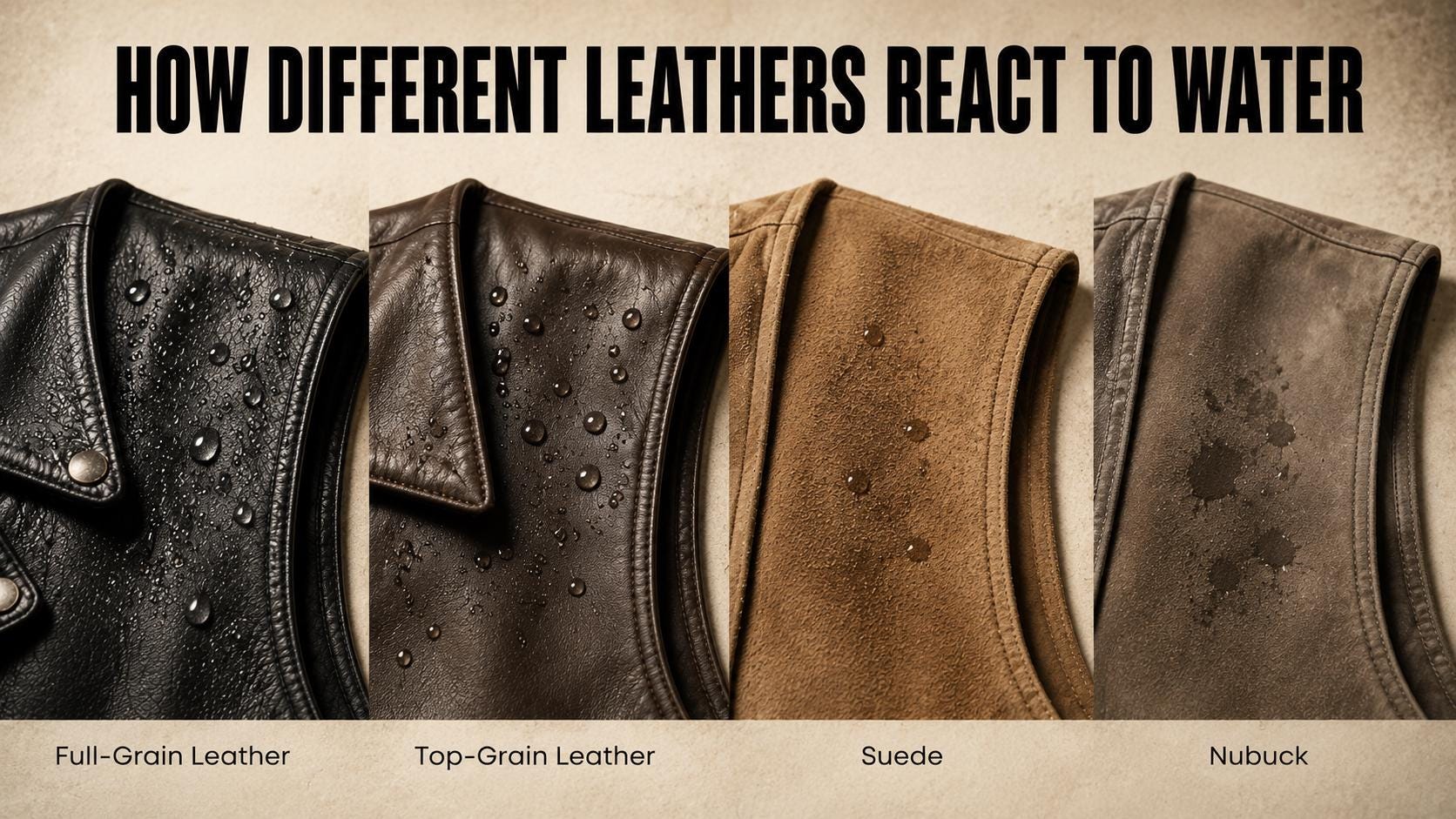
Not every leather vest responds to moisture in exactly the same way.
Full-Grain Leather
Full-grain leather retains the natural grain of the hide and is known for its durability and distinctive character.It can tolerate incidental moisture reasonably well when properly maintained, but it is still porous.Heavy saturation should be avoided.
Top-Grain Leather
Top-grain leather undergoes more surface processing than full-grain leather. Its finish may provide additional resistance to moisture, depending on how it was manufactured.Even so, it should not automatically be considered waterproof.
Suede
Suede has a soft, napped surface that can be particularly sensitive to water.Moisture may produce visible marks or alter the texture.If a suede vest becomes wet, specialized suede-care techniques are preferable to conventional leather creams.
Nubuck
Nubuck also has a distinctive textured surface and requires specialized maintenance.Water can affect its appearance and nap, so avoid treating nubuck with products intended for smooth leather unless the manufacturer specifically recommends them.
Finished or Treated Leather
Some leather vests have protective coatings, waxes, oils, or other treatments designed to improve their resistance to moisture.These finishes can be useful, but they can wear down over time through friction, cleaning, and regular use.
How to Protect a Leather Vest From Water Damage
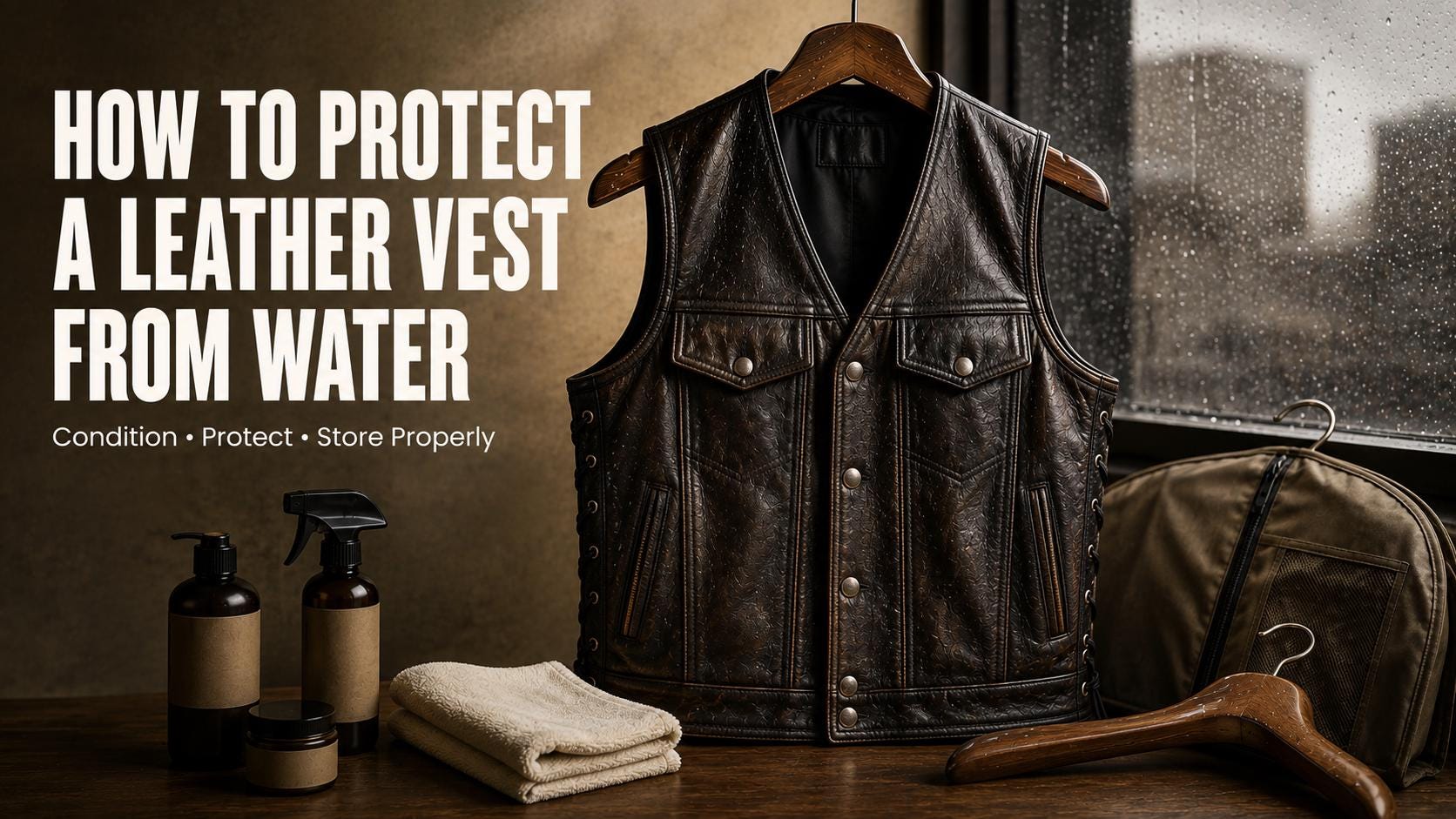
The easiest way to deal with water damage is to prevent it in the first place.Regular maintenance can help preserve the leather's flexibility and surface condition.
1. Condition the Leather Periodically
Use a conditioner appropriate for your leather type.Conditioning can help prevent excessive dryness and maintain suppleness.
2. Use a Compatible Leather Protectant
A leather protectant may add another layer of resistance against incidental moisture.Always check compatibility first.
3. Avoid Prolonged Rain
If heavy rain begins, move indoors or cover the vest whenever possible.
4. Store the Vest Correctly
Store your leather vest somewhere:
- Cool
- Dry
- Well ventilated
- Away from direct sunlight
- Away from excessive humidity
A breathable garment bag is preferable to an airtight plastic bag for long-term storage.
5. Keep the Vest Away From Damp Areas
Basements, poorly ventilated wardrobes, and humid storage areas can create problems even when the vest never directly touches water.
Can You Waterproof a Leather Vest?
You can make many leather vests more water-resistant, but completely waterproofing ordinary leather is a different matter.Leather sprays, waxes, and protective treatments can help water bead on the surface rather than immediately soaking into the material.However, the wrong product can cause problems.A heavy wax might change the appearance of a smooth fashion vest. A conventional leather cream may be unsuitable for suede. Some products can darken lighter-colored leather.Always select a treatment according to the specific leather type.If the vest manufacturer provides care instructions, those recommendations should take priority.The goal is not to turn natural leather into plastic-like waterproof material. The goal is to provide sensible protection while preserving the leather's appearance, breathability, texture, and flexibility.
How to Remove Water Stains From a Leather Vest
Water stains can appear after the vest dries, particularly when moisture evaporates unevenly.Do not immediately reach for household soap or detergent.Leather is chemically different from ordinary clothing fabrics, and aggressive household cleaners can strip finishes or alter coloration.For smooth leather:
- Allow the vest to dry naturally.
- Inspect the affected area.
- Use a leather cleaner only if it is suitable for that specific finish.
- Follow with a compatible conditioner if recommended.
- Test every product on an inconspicuous area first.
For suede and nubuck, use products specifically formulated for those materials.If the stain is severe, widespread, or accompanied by discoloration or finish damage, professional leather cleaning may be the safer option.
How Humidity and Moisture Affect Leather Over Time
Rain is not the only source of moisture that can damage leather.Long-term exposure to excessive humidity can also create problems.A leather vest stored in a persistently damp environment may eventually develop:
- Musty odors
- Surface discoloration
- Mold
- Mildew
- Texture changes
At the other extreme, extremely dry conditions can contribute to excessive moisture loss and brittleness.A balanced storage environment is therefore important.Good air circulation helps prevent trapped moisture from accumulating around the garment.For long-term leather vest storage, avoid compressing the vest tightly into a plastic container. Give it room to breathe.
What to Do After Your Leather Vest Gets Wet
Once the vest has dried, do not immediately put it back into storage.Take a few minutes to inspect it.
Check the Color
Has the leather returned to its original shade?
Check the Texture
Does it still feel soft and flexible?
Check for Water Spots
Look for uneven circles, streaks, or darker patches.
Check for Cracking
Inspect areas that may have become excessively dry.
Check the Shape
Make sure the shoulders and body have retained their natural form.If everything looks normal, the vest may only require routine care.If it feels dry, use a compatible leather conditioner sparingly.
Common Mistakes That Damage Wet Leather Vests
Some of the most avoidable leather problems come from well-intentioned mistakes.
Mistake 1: Drying Leather With Heat
Fast drying is not necessarily good drying.
Mistake 2: Applying Conditioner Without Checking the Leather Type
A product suitable for smooth leather may be inappropriate for suede or nubuck.
Mistake 3: Using Too Much Conditioner
Excessive product can create buildup and change the leather's appearance.
Mistake 4: Storing the Vest While Damp
Trapped moisture can contribute to odor, mildew, and deterioration.
Mistake 5: Using Household Cleaning Products
Bleach, harsh detergents, alcohol-based products, and abrasive cleaners can damage leather finishes.
Mistake 6: Ignoring Repeated Water Exposure
One rainy afternoon may not cause visible damage. Repeated saturation can be considerably more problematic over time.
Mistake 7: Assuming Expensive Leather Is Waterproof
Premium leather is not automatically impervious to water.Quality and waterproofing are separate characteristics.
When Should You Take a Wet Leather Vest to a Professional?
Most minor rain exposure can be handled at home with sensible care.Professional restoration becomes more appropriate when the vest has experienced serious damage.Consider professional help if you notice:
- Extensive water stains
- Severe discoloration
- Deep cracking
- Significant stiffness
- Shrinkage
- Mold or mildew
- Damaged surface coatings
- Persistent unpleasant odors
- Major deformation
Professional leather specialists have access to specialized cleaning, conditioning, and restoration techniques.This can be particularly worthwhile for vintage leather vests, expensive garments, or pieces with sentimental value.A failed DIY experiment can sometimes create permanent damage that was not present initially.
Frequently Asked Questions About Wet Leather Vests
Can leather vests get wet in the rain?
Yes. A leather vest can tolerate some light rain, but it should not be considered waterproof unless it has been specifically designed and treated for waterproof use.
Will rain ruin a leather vest?
Not necessarily. A brief shower usually will not ruin quality leather. Problems are more likely when the vest becomes heavily saturated or is dried improperly.
Can I dry a wet leather vest with a hair dryer?
No. Direct heat can dry leather too quickly and contribute to stiffness, shrinkage, discoloration, or cracking. Allow the vest to air-dry naturally.
What should I do if my leather vest gets soaked?
Gently blot away excess water, place the vest on a broad hanger, and allow it to dry naturally in a well-ventilated area. Once it has dried, inspect the leather and use an appropriate conditioner if necessary.
Can I waterproof my leather vest?
You can improve the vest's water resistance with a compatible leather protectant, spray, or treatment. However, ordinary leather should not automatically be expected to become completely waterproof.
Should I condition leather after it gets wet?
Conditioning may help restore suppleness after significant water exposure, but the product must be suitable for the specific leather. Always follow manufacturer recommendations and test the product first.
Can water permanently stain leather?
Yes. Depending on the leather and the severity of exposure, water can leave persistent marks or alter the finish. Gentle care may resolve minor marks, while serious staining may require professional treatment.
Is suede more sensitive to water than smooth leather?
Generally, yes. Suede and nubuck have textured surfaces that can show water marks and texture changes more readily. They require specialized care.
Final Thoughts: Can Leather Vests Get Wet?
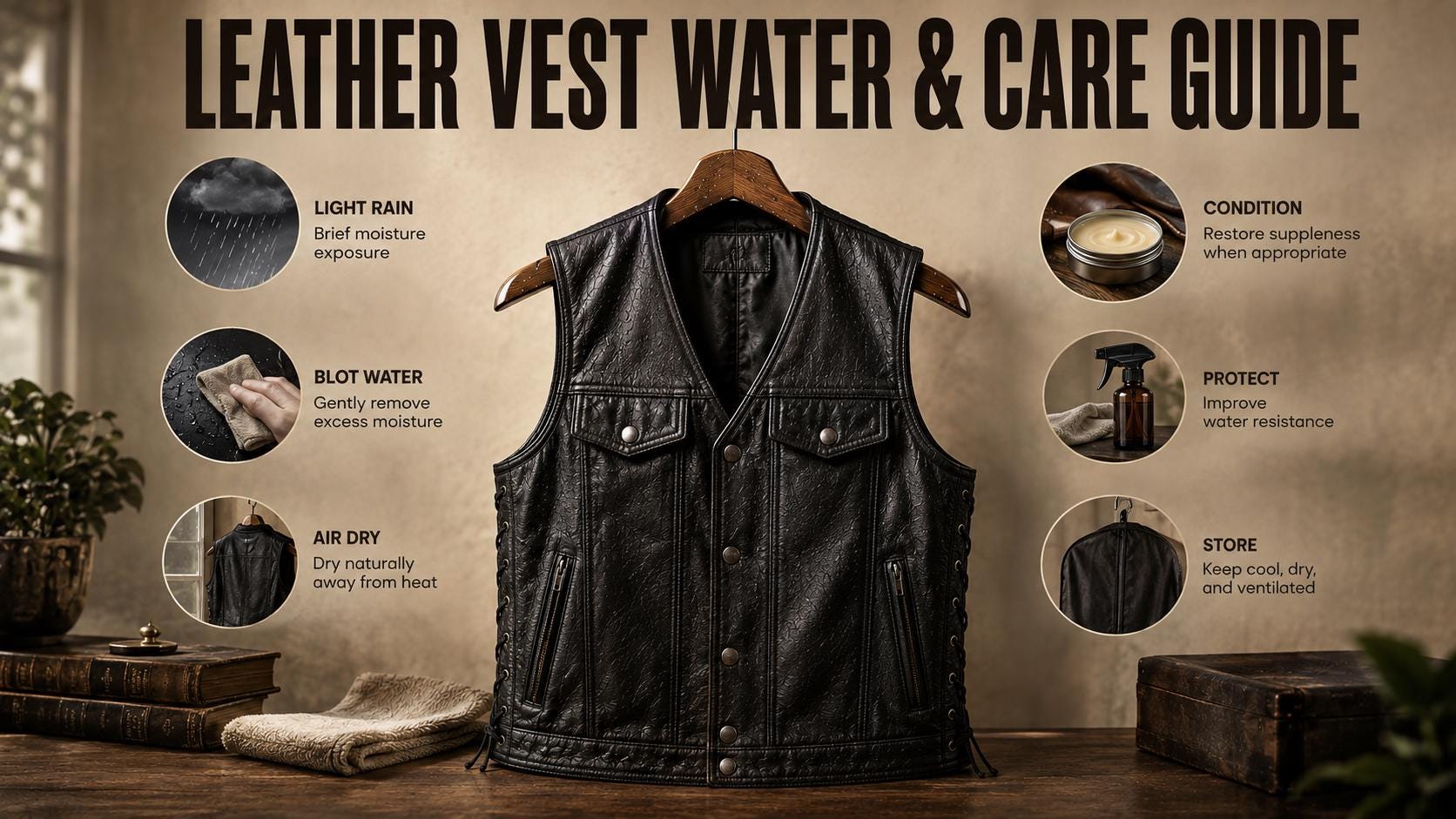
So, can leather vests get wet?Yes, but getting wet and being waterproof are two very different things.A quality leather vest can withstand occasional moisture, particularly when it is properly maintained. The greater concern is prolonged saturation and improper drying. Excessive water can interfere with the oils and conditioning agents that help leather remain supple, while intense heat can accelerate dryness and contribute to cracking.If your leather vest gets caught in the rain, do not panic.Blot the water. Hang the vest properly. Let it air-dry naturally. Inspect the leather. Condition it only when appropriate. Then store it in a cool, dry, breathable environment.For regular protection, choose a leather protectant compatible with your particular leather and avoid unnecessary exposure to heavy rain.With thoughtful maintenance, a genuine leather vest can retain its distinctive grain, supple hand-feel, and rugged character for many years. Water may be an occasional adversary, but with the right care routine, it does not have to shorten the life of your favorite leather vest.